
About
Toujeo® SoloStar®

(insulin glargine 300U/mL)

Toujeo® SoloStar®

Your Toujeo® SoloStar® will help deliver the right dose of insulin for you. It is simple to use, and you will quickly get to grips with how to use it, where to store it and how to deliver your insulin doses.

This site has been designed to support patients who have been prescribed Toujeo SoloStar. You should always listen to the advice from your doctor or nurse, and read the patient information leaflet for more information.

What is Toujeo?

Toujeo is a long-acting insulin called insulin glargine 300 units/mL. It comes in a pre-filled disposable pen called Toujeo SoloStar.
Why have you been prescribed Toujeo?

Toujeo is used to help you manage your diabetes by steadily lowering your blood sugar levels over 24 hours.

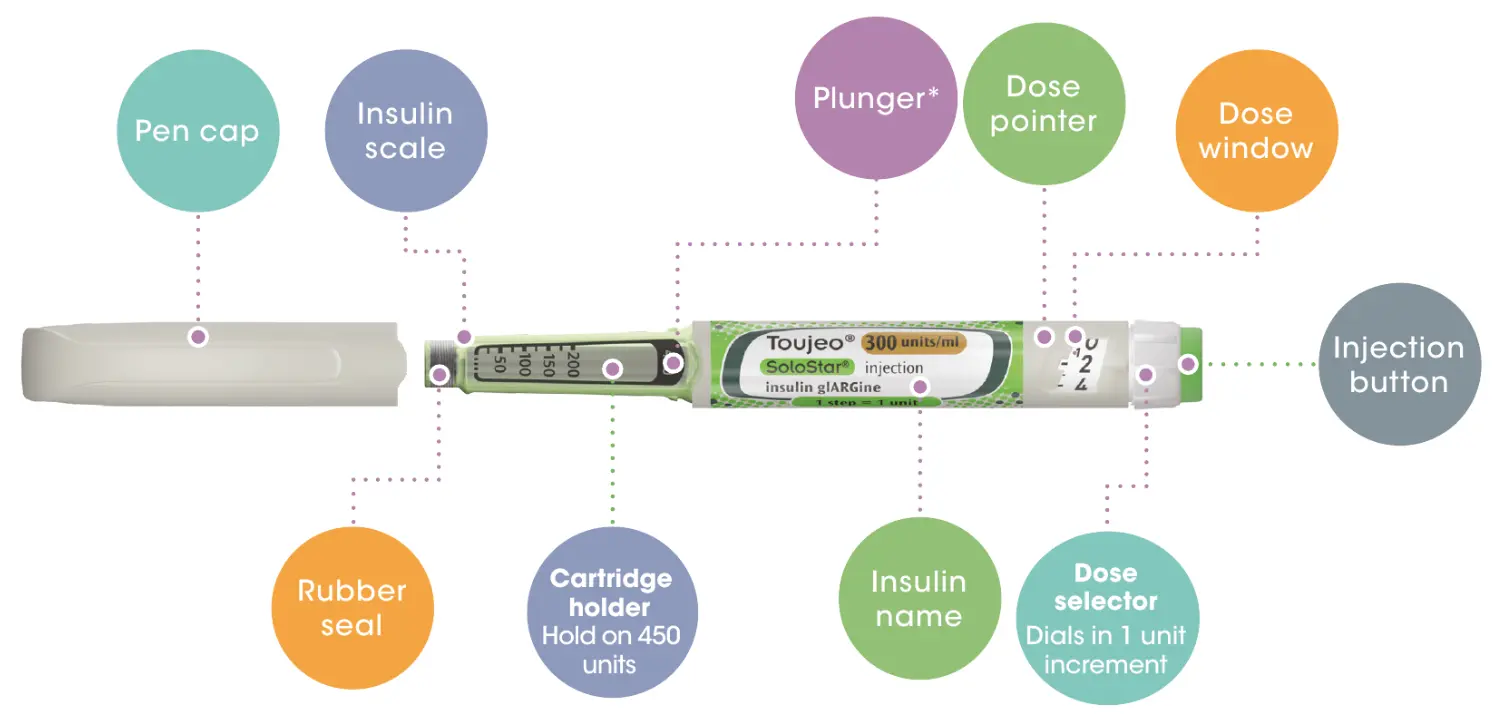
Your SoloStar® Pen:

 AboutToujeo® SoloStar®

*You will not see the plunger until you have injected a few doses

When should you take Toujeo?

Toujeo should be taken once a day, preferably at the same time every day. When needed, you can inject it up to 3 hours before or after the usual time that you take it.

Other medications and Toujeo

Tell your doctor, pharmacist or nurse if you’re taking, have recently taken or might take any other medicines. Some medicines can change your blood sugar levels and this may mean your insulin dose has to change. For the same reason, let them know if you’re stopping any medication.

As part of your treatment plan, you may also need to inject a short-acting insulin at mealtimes. If so, it’s very important that you don’t mix your insulins together, as both Toujeo and short-acting insulin are clear in colour so it’s important to make sure you’re using the correct insulin in the right pen at each injection.

Always take this medicine exactly as your doctor, pharmacist or nurse has told you.

Safety information

Like all medicines, this medicine can cause side effects, although not everybody gets them. Low blood sugar (hypoglycaemia) is a very common side effect of Toujeo (may affect more than 1 in 10 people), which may be life-threatening if it is prolonged or severe. You should tell your doctor, pharmacist or nurse straight away if you notice this side effect. A common side effect (may affect 1 in 10 people) is skin thickening (lipohypertrophy) at the injection site. Another common side effect is skin and allergic reactions where the injection is given. The signs may include reddening, unusually intense pain when injecting, itching, hives, swelling or inflammation which can spread around the injection site. Most minor reactions to insulins usually disappear within a few days to a few weeks. For a full list of side effects, please read the patient information leaflet included in your pack and consult your doctor or nurse.

Adverse events should be reported.

Reporting of side effects: If you get any side effects, talk to your doctor, pharmacist or nurse. This includes any possible side effects not listed in the package leaflet. You can also report side effects directly via the Yellow Card Scheme at www.mhra.gov.uk/yellowcard. By reporting side effects, you can help provide more information on the safety of this medicine.